Crochet for Absolute Beginners: Easy First Project
Learning to crochet looks harder than it is. I promise. It’s really just one loop pulled through another loop, repeated until something lovely appears. If you can tie a shoelace, you can learn this.
Today we’re making a simple cotton washcloth. Small, forgiving, useful. You’ll finish it in an evening and actually want to keep it. Perfect first project.
Materials List
- One ball of worsted weight cotton yarn (around 50g is plenty). Dishcloth cotton is cheap and easy to see. No cotton? Any smooth worsted acrylic works fine for practice.
- A crochet hook, size 5mm (US H-8). Check the yarn label — it usually suggests a hook size. If yours says 5.5mm, no worries, use that.
- Scissors. Any sharp pair from the kitchen drawer will do.
- A blunt yarn needle for weaving in ends. A small safety pin works in a pinch.
- Good light and a comfy seat. Seriously, this matters more than you think.
- Optional: a stitch marker. A paperclip or a loop of contrasting yarn does the same job.
Step-by-Step
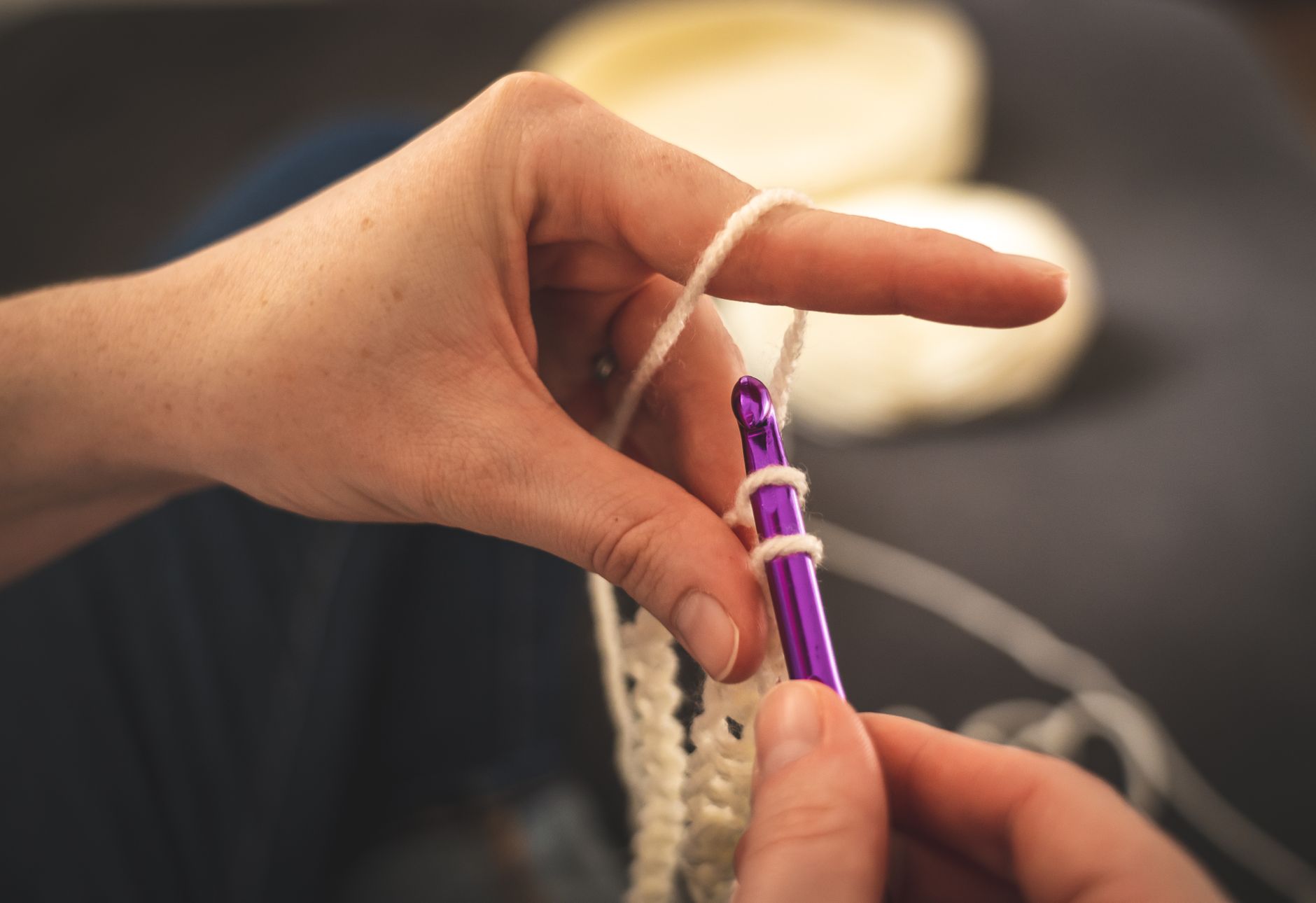
- Make a slip knot. Lay about six inches of yarn tail across your palm. Cross the working yarn over the tail to make a loop. Reach through the loop, grab the working yarn, and pull a new loop back through. Slide that loop onto your hook and gently tug the tail to snug it up. It should slide along the hook, not strangle it.
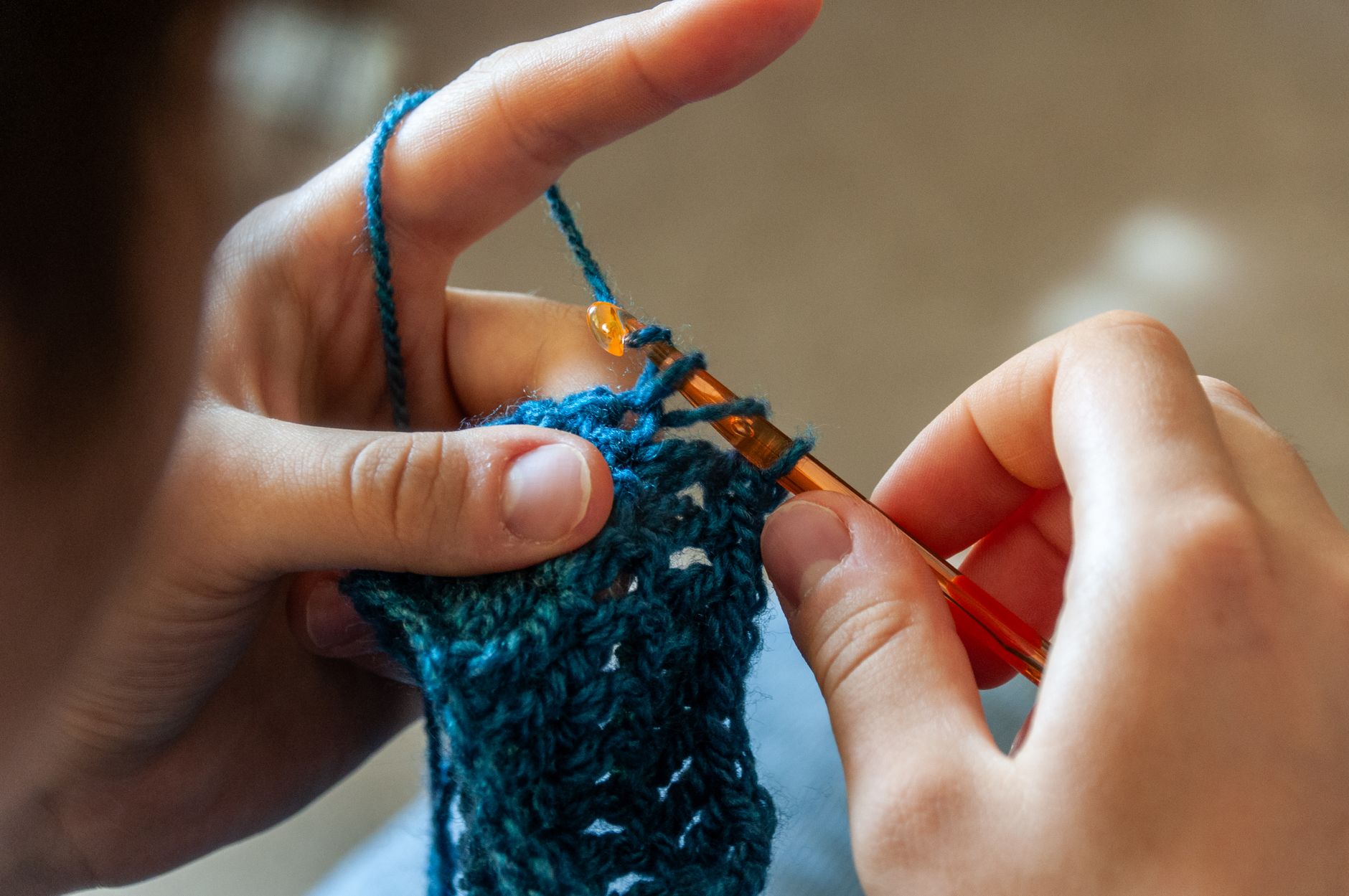
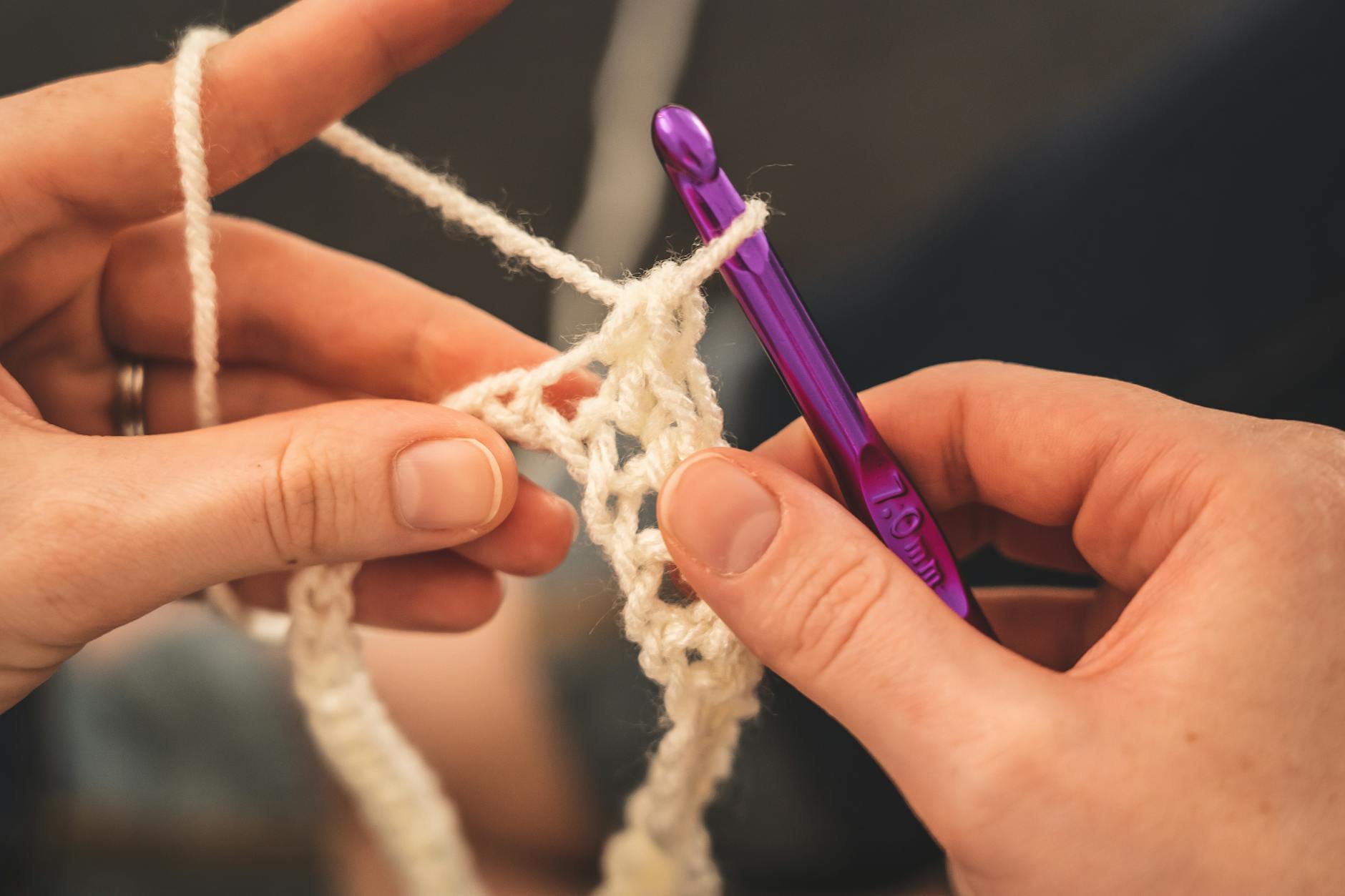
- Hold the hook properly. Two ways work: the pencil grip (like holding a pencil) or the knife grip (like holding a butter knife). Try both right now. Whichever feels less awkward is correct for you. There’s no wrong answer here.
- Make a chain. With the slip knot on your hook, wrap the yarn over the hook from back to front. Pull that wrap through the loop on your hook. That’s one chain. Do it 25 more times. You now have 26 chains. Don’t stress if they look uneven — every beginner’s first chain looks a bit wonky.
- Count your chains. Lay the chain flat without twisting it. Count the V shapes along the top. If you got 24 or 27, that’s completely fine. This is a washcloth, not a spaceship. Precision comes later.
- Work your first single crochet. Insert your hook into the second chain from the hook (skip the one right next to it). Wrap the yarn over the hook and pull up a loop. You now have two loops on your hook. Wrap the yarn over again and pull through both loops. Congratulations — that’s a single crochet. It’s the only stitch you need today.
- Keep going across. Single crochet into every remaining chain. When you reach the end, you should have 25 stitches. Chain one, then turn your work like flipping a page in a book.
- Work the next row. Single crochet into the first stitch (the one right under the chain-one you just made). Then into every stitch across. Chain one, turn. Repeat.
- Keep repeating until it’s square. You’ll need roughly 25 rows. Stop when it looks square-ish. Weave your yarn tail through the last loop and pull tight to fasten off. Leave a four-inch tail.
- Weave in the ends. Thread each tail onto your yarn needle and poke it back and forth through the fabric a few times. Snip close. Done.
Beginner Tips
The number one mistake? Tension. Beginners either grip the yarn like it insulted their mother, or let it dangle loose and loopy. Aim for the middle. Your stitches should feel like a firm handshake, not a death grip. If your hands ache after ten minutes, you’re squeezing too hard. Loosen up.
Another common stumble: losing track of where a row begins. That first stitch of each row loves to hide. Count your stitches every few rows. If you started with 25, you should still have 25. The moment you have 24, you’ve skipped one. The moment you have 26, you’ve added one.
Here’s a counter-intuitive tip: don’t aim for perfection on your first washcloth. Aim to finish. A lumpy, slightly trapezoidal washcloth that you actually completed teaches you more than a perfect row you abandon halfway. Finished beats flawless. Every single time.
Also — put your work down when you’re frustrated. Crochet is not a competition. Walk away, make tea, come back. Your hands will remember what your brain forgot.
Creative Variation
Once you’ve mastered single crochet, try a striped washcloth. Work two rows in one colour, then switch to another. To change colours, simply drop the old yarn at the end of a row and pick up the new one, leaving a tail to weave in later. It’s the easiest way to make your project look far more complicated than it was.
Want to go further? Try working in the back loop only for a ribbed texture. That single tweak — just inserting your hook under the back loop instead of both — creates a stretchy, tactile fabric that feels completely different. One tiny change, a whole new look.
Troubleshooting
My edges are wonky. Totally normal. Almost every beginner’s first project has sloping sides. Count your stitches. If the count is right, the wonkiness is tension, and tension evens out with practice. Block the finished cloth by dampening it and pressing it flat. Instant improvement.
My stitches are too tight to insert the hook. You’re pulling the yarn after each stitch. Stop that. Let the loop sit naturally on the hook. If you can’t slide the hook in easily, your tension is too firm.
I’ve lost count of my rows. Look at the fabric. Each row of single crochet looks like a little horizontal ridge. Count the ridges up the side. Or just stop when it’s square. Nobody will know.
My yarn keeps splitting. Your hook might be catching between the plies. Try turning the hook slightly as you insert it, so the smooth throat of the hook faces the yarn. Also, some cheap yarns just split. It’s not you.
I made a hole in the middle. You probably skipped a stitch or worked into the chain space instead of the stitch. Rip back to the hole, redo that row. Ripping back is not failure. It’s editing.
And if it all goes sideways? Pull the whole thing out and start again. Yarn is forgiving. It doesn’t hold grudges.
You’ve just learned the foundation stitch of crochet. Everything else — granny squares, amigurumi, blankets, cardigans — builds on the single crochet you made today. That’s not a small thing. You picked up a hook, made a loop, and turned string into something useful. Keep that first washcloth. In six months, you’ll look back at it and smile at how far your hands have come.