How to Build a Terrarium: DIY Tutorial
How to Build a Terrarium: A DIY Craft Tutorial for Any Skill Level
A terrarium is a tiny world you get to boss around. It sits on your windowsill, asks for almost nothing, and rewards you with green life all year. Ever killed a houseplant? This project is your redemption arc. Let’s build one together.
Materials List
- A clear glass container — a mason jar, fishbowl, brandy snifter, or even a cleaned pickle jar works beautifully. Thrift shops are goldmines for this.
- Small stones or gravel for drainage — aquarium gravel, pea gravel, or leftover potting soil from a broken pot. No fancy “terrarium stone” needed.
- Activated charcoal — the kind for aquariums or filters. Skip it if you must, but it genuinely helps with smell and mold. Crushed barbecue charcoal works in a pinch.
- Potting mix — a light, peat-free blend is ideal. Cactus mix is a solid alternative if you tend to overwater.
- Small plants — try fittonia, pothos cuttings, spider plant babies, or a tiny fern. Succulents work too, but they want a different setup, so pick one lane.
- Decorative bits — moss, pebbles, tiny figurines, sea glass, or a smooth stone you pocketed on a walk. This is the fun part.
- Tools — long tweezers (or chopsticks), a spray bottle, and a spoon. A funnel made from paper helps with narrow jars.
Step-by-Step
- Clean your container. Wash it with warm soapy water and dry it fully. Any residue or dust will show through the glass, and you want a clear view of your little landscape.
- Add the drainage layer. Pour in about an inch of gravel or small stones. Tilt the jar gently to spread them evenly. This layer keeps roots from sitting in soggy soil, which is the number one terrarium killer.
- Sprinkle a thin layer of charcoal. Just a tablespoon or two over the stones. It filters the air inside the sealed environment and keeps things fresh. Think of it as the terrarium’s deodorant.
- Add your soil. Spoon in potting mix until you have two to three inches, depending on container size. Slope it toward the back for a hillside effect — flat soil looks boring. Leave at least an inch of clearance below the rim so plants have room to grow.
- Plan your planting. Set your plants on a tray and imagine the layout before you dig. Taller plants go toward the back or center, low growers toward the front. Move them around until it feels right.
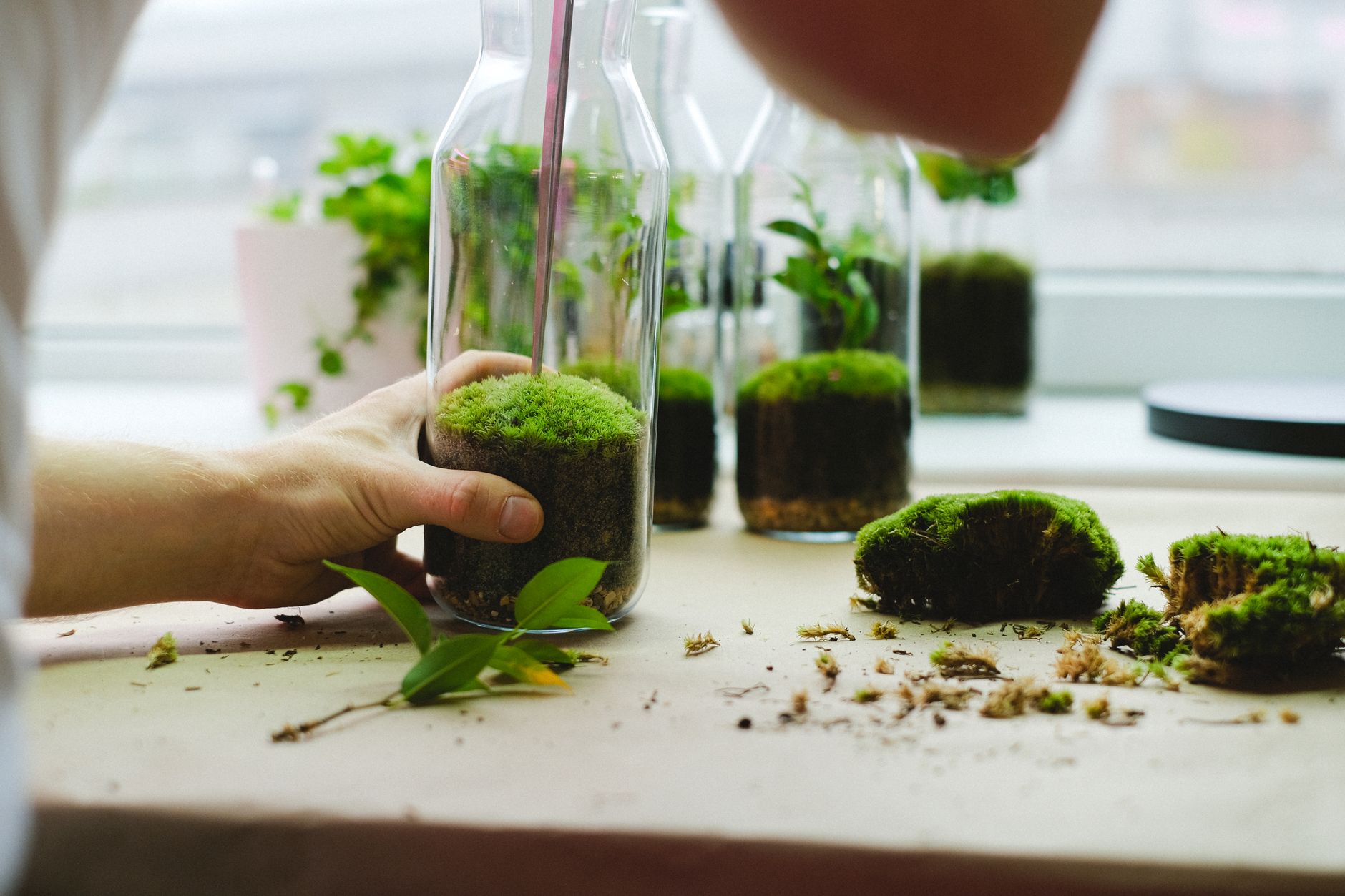
- Plant with tweezers or chopsticks. Make a small hole with your finger or a stick, then lower the plant in roots-first. Use the tweezers to tuck soil around the base. Press gently. Repeat for each plant, spacing them so leaves do not overlap too much.
- Add moss and decorations. Press damp moss around the base of plants for a finished look. Place pebbles, figurines, or a tiny path of stones. Keep it simple — a few well-placed items beat a cluttered scene.
- Water lightly. Mist the soil until it is moist but not soaked. If you see water pooling in the drainage layer, you have overdone it. For an open terrarium, a few tablespoons is usually plenty.
- Wipe the glass and place it. Clean any smudges inside and out with a dry cloth. Set your terrarium somewhere with bright, indirect light — a north or east windowsill is perfect. Direct sun can cook the plants inside a sealed jar.
Beginner Tips
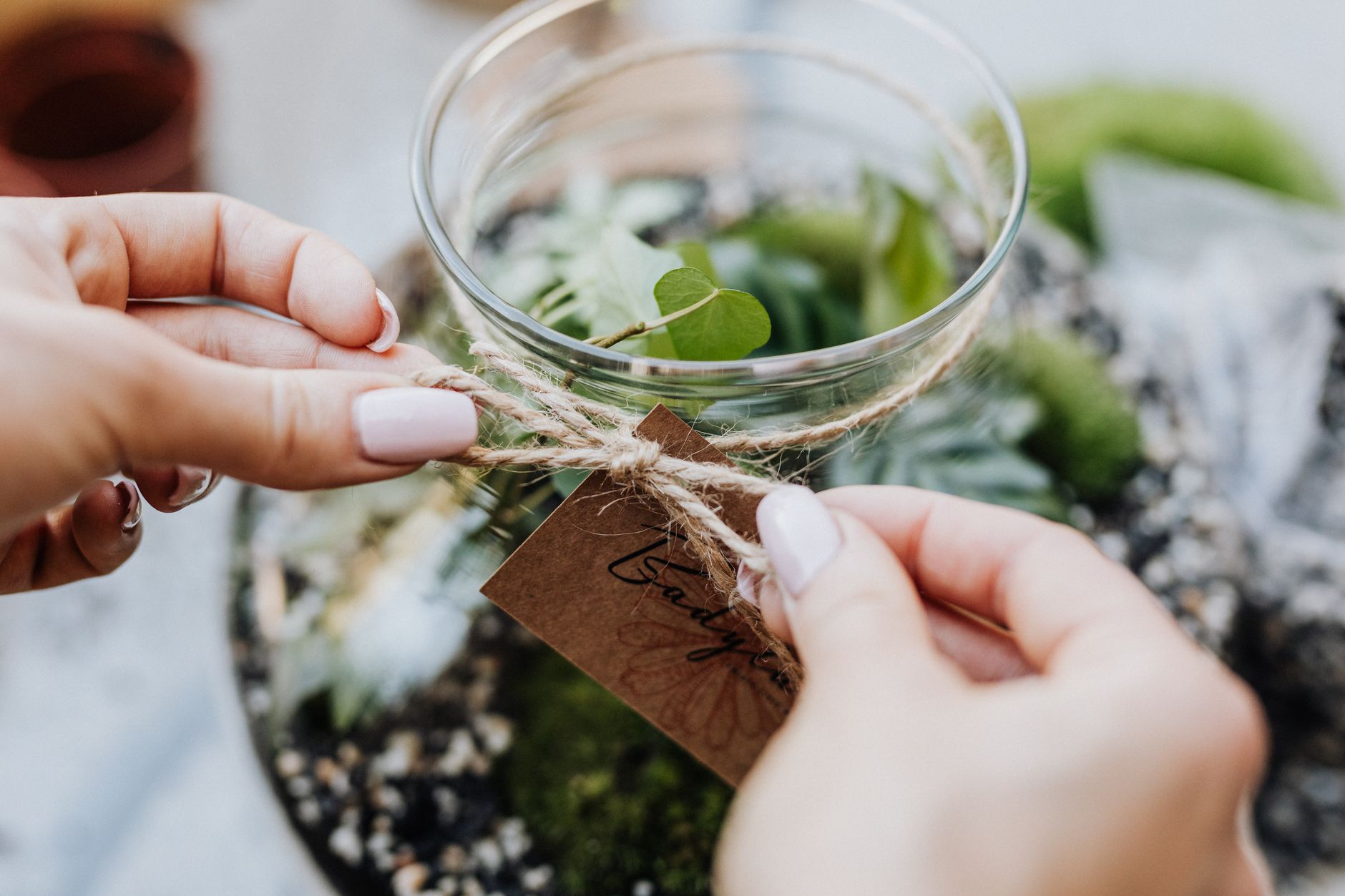
Do not seal a terrarium on day one. I know the allure of a closed ecosystem is strong, but give your plants a week or two to settle. Seal it immediately and something goes wrong, you will not know why. Start open, then add a lid once things look stable.
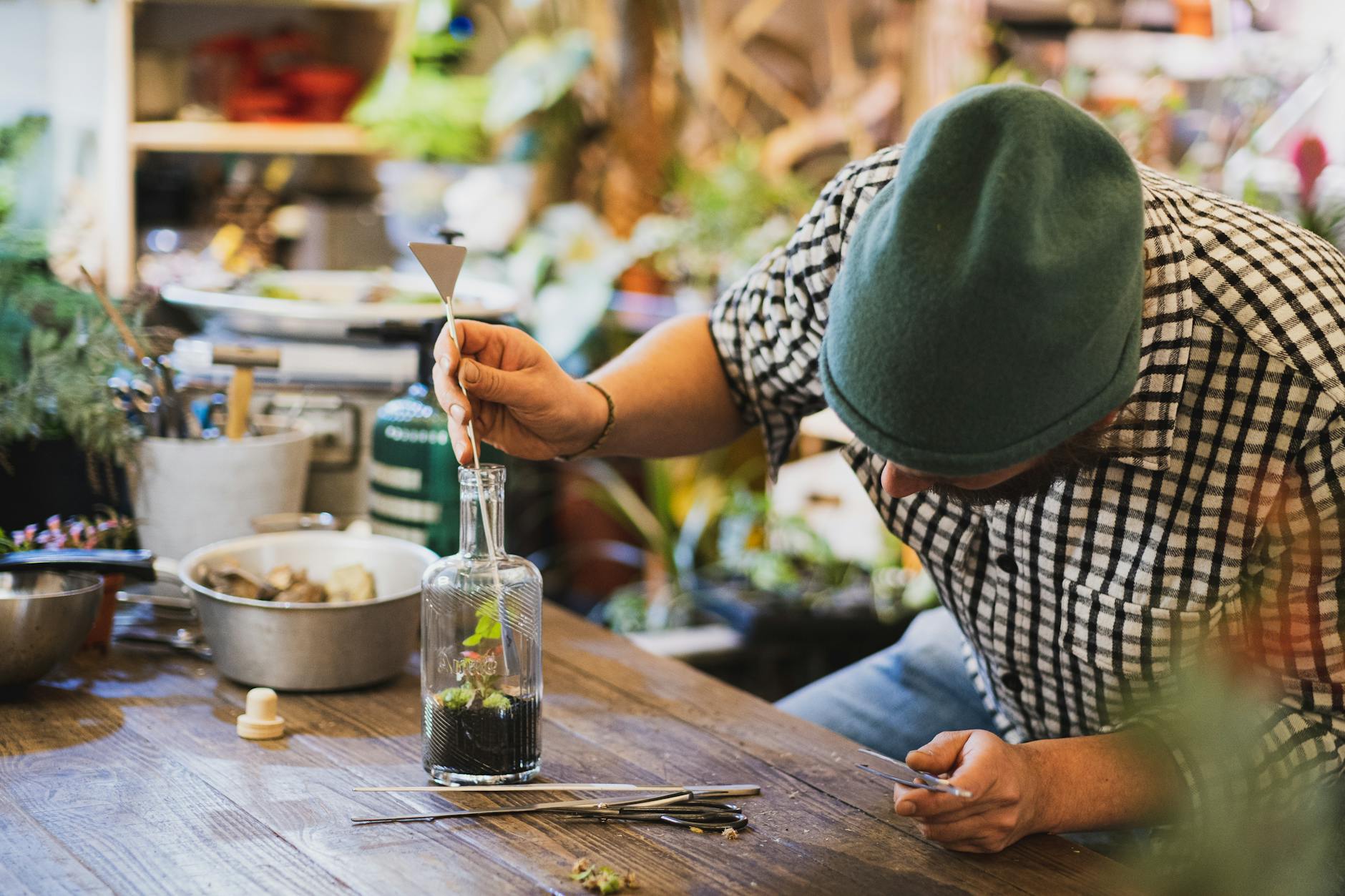
Water way less than you think. This is the mistake I see in every single workshop. A terrarium is not a houseplant in a pot. It holds moisture, and in a closed container it recycles water endlessly. If the soil feels damp, wait. Yellowing leaves usually mean too much water, not too little.
Skip the succulents-in-a-jar combo. It looks adorable on Pinterest and dies within a month. Succulents need dry air and lots of light. A sealed humid jar is their nightmare. Pick tropical plants for closed terrariums and keep succulents for open, sandy setups.
Do not crowd your plants. It is tempting to stuff every inch with greenery because it looks lush right away. But plants grow. Leave gaps. A sparse terrarium today becomes a full one in two months.
Clean the glass before you finish. Condensation and soil smudges are much harder to remove once plants are in the way. A quick wipe saves you a frustrating afternoon later.
Creative Variation
Try a single-plant “portrait” terrarium. Instead of a whole landscape, choose one striking plant — a variegated fittonia, a tiny orchid, or a curly fern — and build the entire scene around it. Use a tall, narrow vessel to frame it like a painting. Add a layer of colored sand beneath the soil for a visible stripe of color. Then finish with one dramatic stone or a small piece of driftwood. This approach is counter-intuitive because most tutorials push you to cram in variety. But one plant, thoughtfully placed, often looks more designed and intentional than a jungle in a jar.
Troubleshooting
Mold appears on the soil or glass. This means too much moisture and not enough airflow. Open the lid, wipe the mold away with a cotton swab, and let it dry out for a few days. Remove any dead leaves immediately — they are mold magnets.
Leaves turn yellow and mushy. Classic overwatering. Stop watering entirely. If the container is sealed, leave it open. You may need to repot if the soil stays soggy for more than a week.
Leaves turn brown and crispy. Too much direct sun or not enough water. Move it away from the window and give a light mist. Crispy edges on ferns usually mean dry air, so a closed lid can help here.
Plants grow too tall and leggy. Not enough light. Move the terrarium closer to a window, but keep it out of harsh afternoon sun. You can also pinch off the top growth to encourage bushier plants.
Condensation never clears. Some fog is normal in the morning. If it stays all day, the terrarium is too wet. Open the lid for a few hours. If it returns, leave it open permanently or add more charcoal to the drainage layer.
Algae grows on the glass. Green film on the inside means too much light and moisture. Scrub it off with a soft cloth, reduce light, and cut back on watering.
Everything dies. It happens. Empty the container, wash it, and start again. Terrariums are forgiving teachers. Your second one will be better, and your third will be stunning.
Building a terrarium is not about perfection. It is about making a small, living thing that brings you a little joy every time you walk past it. So grab a jar, raid your houseplant for a cutting, and give it a go. What is the worst that could happen? You learn something, and you make another one.